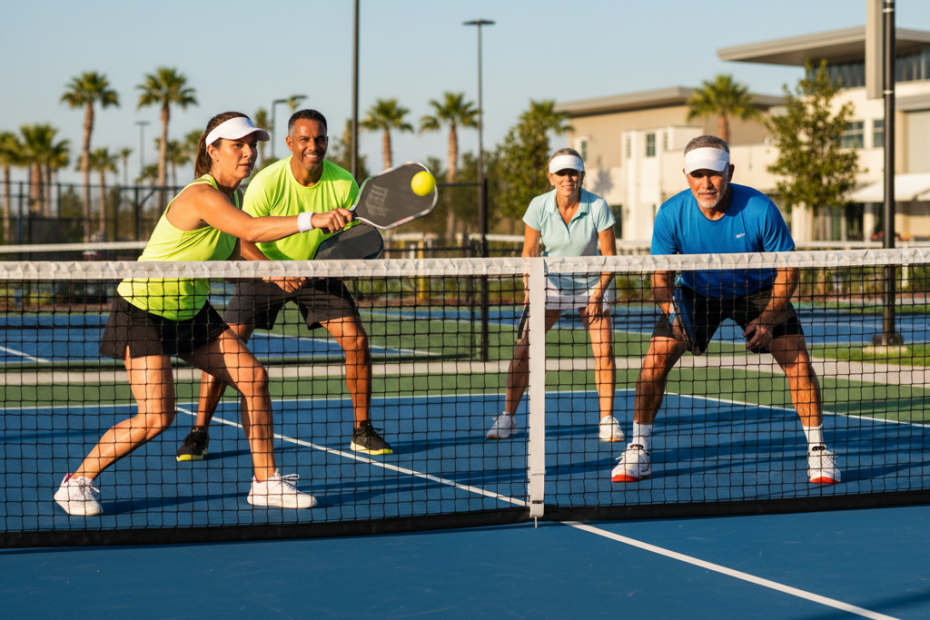
Whether you’re a solo athlete or a social player, pickleball offers two distinct ways to enjoy the court: singles and doubles. It seems that doubles is naturally more popular and some pickleball players will not even attempt singles. While the basic rules remain the same, the strategy, physical demands, and social dynamics are worlds apart. In this post, we’ll break down the key differences to help you decide which format suits your style.
Singles Pickleball: The Ultimate Individual Test
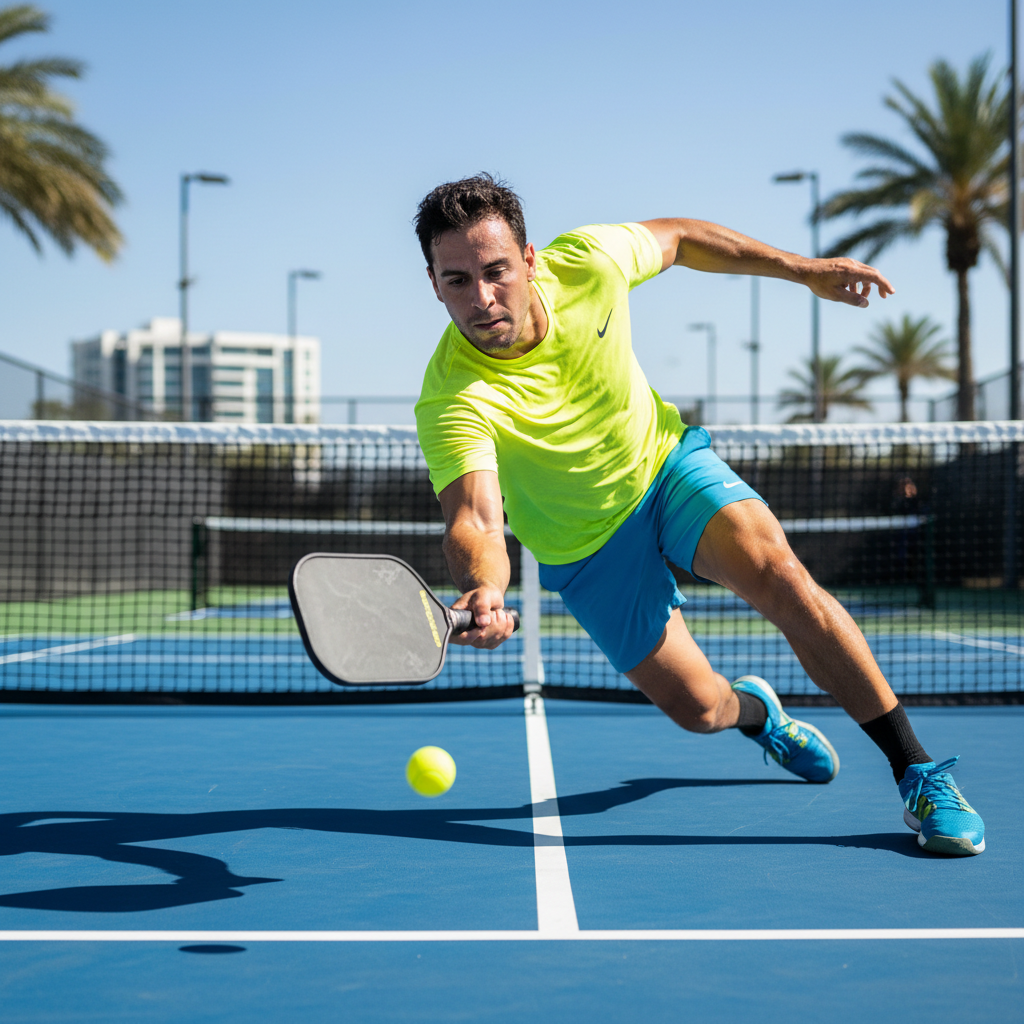
Singles pickleball is a high-intensity workout. Since you are the only one on your side of the court, you are responsible for every shot. This format emphasizes speed, agility, and deep baseline drives. Unlike doubles, where dinking at the kitchen line is the primary strategy, singles often involves more baseline player, more side to side movement, and running. As a former tennis player I think singles is more of a natural transition from tennis to pickleball.
- Physical Demand: High endurance and quick sprints.
- Strategy: Deep serves, passing shots, and exploiting open court space.
- Best For: Players who enjoy a rigorous physical challenge and individual accountability. Former tennis players
Doubles Pickleball: Strategy, Socializing, and Teamwork
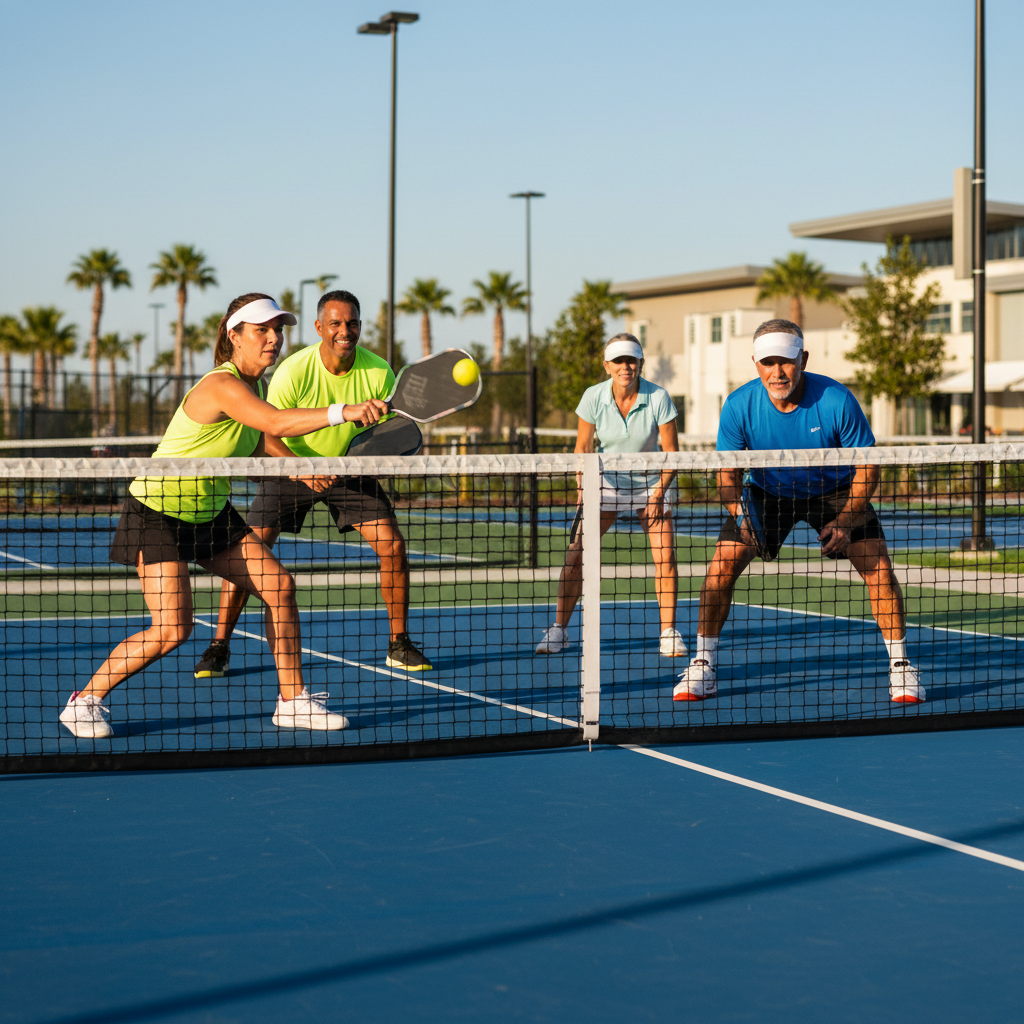
Doubles is the most popular way to play pickleball. It turns the game into a tactical chess match. With two players on each side, the court feels much smaller, making it harder to find an opening. Success in doubles comes from communication, teamwork, and mastering the “soft game” at the non-volley zone (the kitchen).
- Physical Demand: Moderate; focuses more on quick reflexes and lateral movement.
- Strategy: The “dink” battle, third-shot drops, and patient positioning at the net.
- Best For: Social players, strategists, and those who enjoy collaborating with a partner.

Singles vs. Doubles: A Quick Comparison
To summarize, here is how the two formats stack up against each other:
| Feature | Singles | Doubles |
|---|---|---|
| Court Coverage | Full Court (Intense) | Half Court (Shared) |
| Game Speed | Fast / Power-based | Tactical / Placement-based |
| Primary Strategy | Passing Shots & Sprints | Dinking & Teamwork |
| Social Aspect | Competitive / Solitary | Highly Social / Team-oriented |
Which Should You Play?
The beauty of pickleball is that you don’t have to choose! Many players use singles to improve their fitness and groundstrokes, while playing doubles for social engagement and tactical mastery. If you’re looking for a sweat, go singles. If you want to master the kitchen line with friends, go doubles.
If you’re playing on public courts you may find it more challenging to play singles as people waiting may give you are hard time with many people waiting for you to finish. The mindset in pickleball is you could fit 4 people on a court and reduce the wait for the rest. It’s often easier if you pay for a court and invite players that are interested to play singles.
One other factor is if you are playing in a tournament and are having trouble finding a doubles partner you can always enter singles. In my first tournament in Malaysia I couldn’t find a partner at first so I entered singles first otherwise you have to resort to playing doubles scramble or with a random partner, which can be risky.
I also find that singles is more challenging as you will need to hit on both sides forehand and backhand fairly well. In doubles you can get away with just hitting a forehand and hiding or running around your backhand. This tends to expose some players that are good at doubles, but may not perform at the same level as in singles.
Separate DUPR
You may be surprised to know that your singles and doubles DUPR scores are separate. Once I realized this I was actually excited to try singles tournaments as I had nothing to lose. I knew I could compete in a Singles DUPR tournament without impacting my doubles DUPR score.
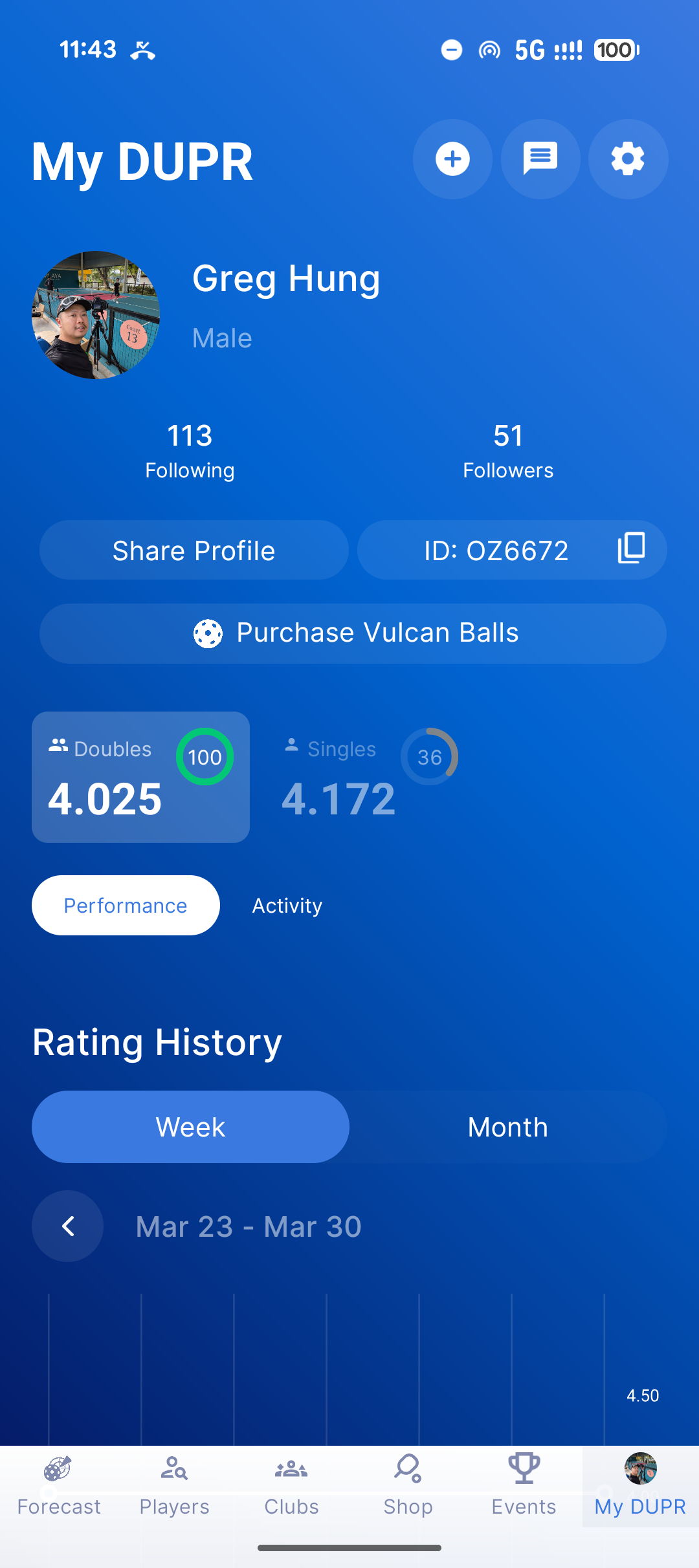
sep dupr