If you’re hooked on pickleball, taking a day off probably feels like punishment. The fast-paced rallies, social community, and low barrier to entry make it easy to play five, six, or even seven days a week.
However, your body doesn’t build speed, power, and durability on the court—it builds them during recovery. Without structured rest days, consecutive days on hard courts lead straight to diminishing returns, sluggish court coverage, and chronic overuse injuries.
Why Rest Days Matter in Pickleball
The explosive lateral cuts, rapid deceleration, and repetitive rotational swings place intense strain on your kinetic chain:
- Tendon & Joint Healing: Connective tissues (like the Achilles tendon, patellar tendon, and rotator cuff) have limited blood flow and require 24 to 48 hours to repair micro-tears.
- Neuromuscular Sharpness: Fast hands and reaction time depend on a fresh central nervous system (CNS). CNS fatigue causes missed dinks and slow reaction to speedups.
- Overuse Injury Prevention: The vast majority of pickleball injuries—such as tennis elbow, Achilles tendinitis, and plantar fasciitis—are cumulative stress injuries caused by insufficient recovery.
5 Signs You Need an Immediate Pickleball Rest Day
- Morning Stiffness: Getting out of bed with sore heels, tight Achilles tendons, or aching lower back.
- Declining Hand Speed: You’re consistently late on kitchen-line firefights or mishitting routine third-shot drops.
- Forearm or Elbow Soreness: A dull ache near the lateral elbow during simple paddle gripping or wrist extension.
- Heavy Legs & Delayed Split-Steps: Inability to push off explosively when chasing lobs or resetting hard drives.
- Elevated Resting Heart Rate & Disrupted Sleep: Common indicators that your nervous system is in an overtrained, sympathetic state.
Active Recovery vs. Complete Rest: How to Structure Your Off-Days
A rest day doesn’t mean sitting on the couch all day. Depending on how your joints feel, use one of two recovery approaches:
| Recovery Type | Best For | Recommended Activities |
| Active Recovery | Light muscle soreness, joint stiffness, keeping mobility high | 20–30 min brisk walk, light cycling, mobility flow, foam rolling, band stretching |
| Full Rest | Joint inflammation, forearm pain, deep mental/physical fatigue | Complete physical downtime, contrast showers, hydration, 8+ hours of sleep |
Ideal Weekly Pickleball Schedules by Skill & Intensity
- Recreational / Casual (1.0–3.0): 2–3 play days per week | 2 active recovery days | 2 full rest days
- Competitive / High-Volume (3.5–4.5+): 3–4 high-intensity court days (drills/matches) | 1–2 cross-training/mobility days | 1–2 full rest days
- Tournament Prep: 4 court days, tapering volume down 48–72 hours prior to competition to ensure peak CNS readiness.
Pro Recovery Habits to Accelerate Rebuilding
- Post-Session Cool Down: Spend 5 minutes on static calf, quad, and hamstring stretches rather than immediately sitting down.
- Forearm & Grip Care: Use a massage gun or foam roller on your forearm flexors and extensors to prevent tension accumulation in the elbow.
- Targeted Foot & Ankle Mobility: Roll the bottom of your feet over a lacrosse ball or frozen water bottle to relieve plantar fascia stress.
- Sleep & Protein Intake: Aim for 7–9 hours of sleep and 1.2–1.6g of protein per kilogram of body weight to support muscle tissue remodeling
My Personal Recovery Routine
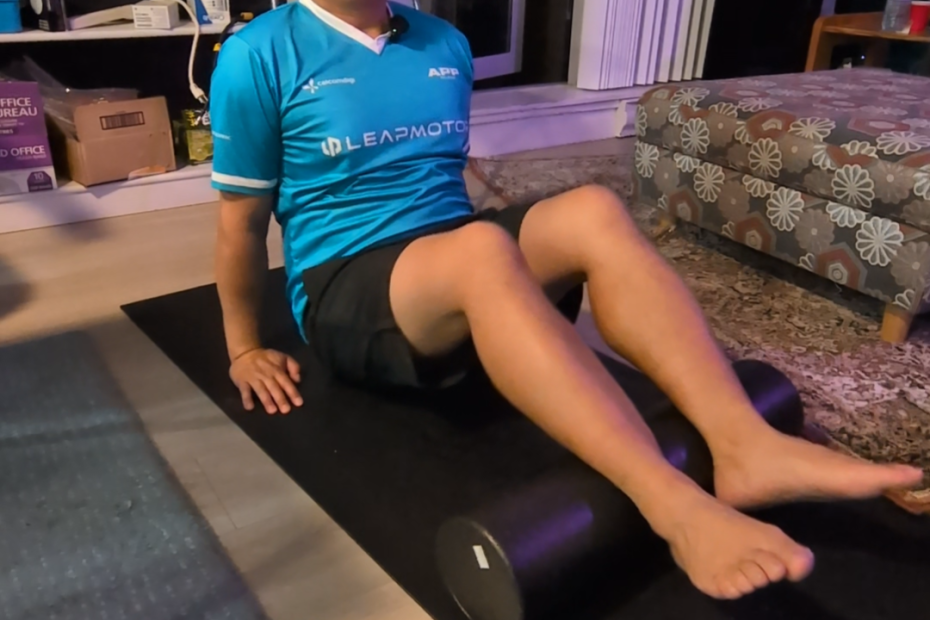
I’ll play 3-5 times a week and aim to rest 2-3 days a week. On my rest days I may do golf or weight training/pool day. After each session I have an amazon essential roller that I use to roll out my back, quads, hamstrings and calves on a yoga mat. I do this almost daily and on occasion to cold plunge or a hot bath with epsom salt.
How It Helps Your Recovery
- Eases Joint and Muscle Tightness: The warm water promotes blood flow and circulation, which relaxes tight lower back muscles, calves, and shoulders heavily used during pickleball twisting and dinking. [1, 2]
- Reduces Impact Stress: Spending 15 to 20 minutes soaking unloads weight from your knees and ankles after hours of pounding on hard court surfaces. [1, 2, 3]
- Soothes Tired Feet: If you suffer from post-game foot fatigue or plantar fasciitis flares, a localized Epsom salt foot soak helps reduce overall discomfort. [1]
- Improves Sleep Quality: Taking a warm bath before bed triggers a cooling response in your core body temperature afterward, which promotes deeper sleep—the most critical phase for actual muscle tissue repair. [1, 2, 3]